
Exploring SAP’s Business Data Cloud: A Unified Future for Data and Analytics
May 23, 2025 | by Rick Kromkamp

SAP has officially ushered in a new era of data and analytics with the launch of the Business Data Cloud (BDC)—a strategic evolution that brings together several of its existing data and analytics offerings under one cohesive platform. This includes powerful tools like SAP Analytics Cloud (SAC), DataSphere, a modern Business Warehouse (BW) cloud environment, and integration capabilities with Databricks. The aim? To deliver a unified, accessible, and intelligent data ecosystem for customers that addresses long-standing pain points in SAP’s analytics landscape.
What is Business Data Cloud?
At its core, Business Data Cloud simplifies how businesses access, integrate, and utilize SAP data. It offers:
- Data Products: Pre-packaged business datasets with semantically aligned master and transactional objects. These are easily consumable and can be discovered via a product catalog, making them a solid foundation for enterprise reporting and analytics.
- Harmonized Data Models: Delivered as part of the platform, these models provide a standardized and consistent approach to analyzing data across multiple SAP and non-SAP systems.
- Insight Applications: Ready-to-use analytical applications that address specific business scenarios and provide immediate value.
Why Business Data Cloud?
Historically, accessing data within the SAP ecosystem has been both complex and time-intensive. With BDC, SAP is addressing this by offering:
- Easier Data Access: Reducing the time and complexity required to extract meaningful data from SAP systems.
- Cross-Business Visibility: Integrating data across SAP and cloud-based applications like Concur and Ariba for a more comprehensive view.
- Unified Business Models: Overcoming the challenge of fragmented data models across SAP products to provide a single source of truth.
- AI Enablement: Clean, consistent data is a prerequisite for AI and analytics, and BDC is built to support these next-generation capabilities.
- Accelerated Insights: Simplifying the creation of insights by delivering ready-made semantic models and analytical applications.
- Simplified Architecture: Reducing the reliance on multiple toolsets and manual processes, BDC helps streamline operations and improve efficiency.
What Does This Mean for Existing SAP Customers?
BDC’s launch brings with it a few notable changes for SAP’s existing user base:
- Bundled Future Products: Going forward, all new SAP data products (such as SAC and DataSphere) will only be available as part of the Business Data Cloud platform.
- Standalone Product Access: While new sales will be bundled, customers can still purchase individual tools like SAC for specific use cases, such as embedded analytics.
- Ongoing Support: SAP has committed to maintaining support for standalone products for many years to come, ensuring stability for current implementations.
- BW Modernization: Customers using traditional BW tools can benefit from a no-cost modernization assessment to help evaluate their move to BDC.
Final Thoughts: A Promising but Gradual Transition
Overall, BDC is a promising step forward for SAP. It creates a single, unified environment that simplifies data access and enables the kind of advanced analytics and AI use cases that businesses are demanding. While the content provided by SAP is still maturing, we can expect continuous investment to enhance what’s available.
From my experience leading a BI practice with CONTAX over the last two decades, I’ve seen SAP’s delivered content serve more as a starting point than a complete solution. Every organization has unique KPIs and analytical requirements, which means most customers will use BDC’s content as a foundation and build on it with their own use cases.
For businesses already using standalone SAP data tools like BW/4HANA, SAC, or DataSphere, there's no immediate pressure to migrate to BDC. The smart approach is to focus on your current business needs and evaluate BDC adoption when it aligns with your strategy. SAP will undoubtedly push for BDC adoption, but it’s crucial to move only when it makes practical and financial sense.
In short, BDC is an exciting development that has the potential to reshape how SAP customers think about data. It’s a unifying platform that addresses real challenges—but as with any transformation, thoughtful planning and timing are key.
About the Author

Rick Kromkamp
Related Articles
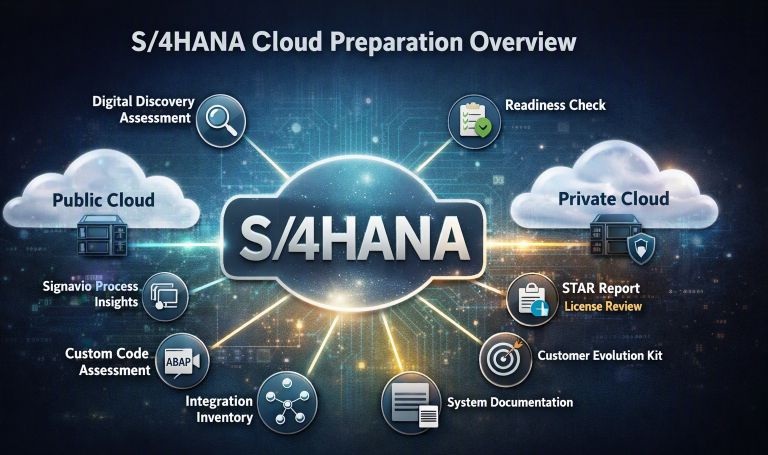
S/4HANA Public vs. Private Cloud — What ECC Customers Should Be Doing Now
A practical guide showing ECC customers the lowcost, highimpact steps they should begin now to ensure a smooth and wellprepared migration to S/4HANA Public or Private Cloud.
S/4HANA Public vs. Private Cloud — Understanding the True Cost Picture
The true cost dynamics of SAP S/4HANA Public vs. Private Cloud, and how subscription, implementation, and lifecycle factors shape longterm total cost of ownership.
S/4HANA Public vs. Private Cloud — Understanding the Fundamentals
A practical overview of the key differences between SAP S/4HANA Public Cloud and Private Cloud to help choose the right path forward.