
SAP Extended ECC to 2035? Read the Fine Print
November 18, 2026 | by Michael Pearson

If you run SAP ECC, you may have heard that SAP has extended support to 2035. It's a welcome headline for anyone who hasn't started planning a move to S/4HANA. Unfortunately, for most ECC customers it isn't true.
SAP did announce a 2035 date. But it applies to one specific, paid cloud offering, with entry requirements that rule out most mid-sized companies. If you run ECC on your own servers or with a hosting provider, your deadlines haven't changed.
What SAP Actually Announced
In 2025, SAP introduced the SAP ERP, private edition, transition option. It's aimed at SAP's largest customers, who may not finish moving to S/4HANA before extended maintenance for ECC ends in 2030. It lets them keep running ECC in SAP's private cloud, under a RISE with SAP subscription, for a few more years. The original window ran from 2031 to 2033.
On October 13, 2026, SAP updated the offering: transition option subscriptions may now run until December 31, 2035, with further prerequisites. That's where the 2035 headline comes from.
The Fine Print
To qualify, all of these have to be true:
- You've moved to SAP's private cloud by 2030. Your ECC system must be running as SAP ERP, private edition, hosted by SAP under RISE, by December 31, 2030.
- You're on SAP HANA. HANA is the only supported database. If your ECC runs on Oracle, SQL Server or DB2, that means a database migration first.
- Your system is big. SAP sets a minimum size of 2 TB for systems on the transition option.
- You buy SAP's Max Success Plan. SAP's top-tier, separately priced support plan is required (at least for 2031 to 2033), and customers signing up from 2026 pay a 20 percent uplift over regular private edition pricing.
- Your add-ons are covered. Products the option doesn't include need a plan of their own. SAP Note 3591251 has the details, including the extra prerequisites for running past 2033.
In other words, it isn't extended support for ECC. It's a paid bridge for very large companies that are already committed to S/4HANA in SAP's cloud and need more time to get there.
What Hasn't Changed
For everyone else, SAP's ECC timeline is the same as it has been since 2020:
- December 31, 2027: mainstream maintenance ends for SAP ERP 6.0 (ECC) on enhancement packages 6 to 8.
- 2028 to 2030: optional extended maintenance, for an extra 2 percentage points on your maintenance fee. Systems on older enhancement packages aren't eligible.
- After that: customer-specific maintenance only. SAP will help with known issues, but there are no new fixes, legal changes or tax updates.
December 31, 2027 is now just over a year away. For a mid-sized company, a move to S/4HANA often takes a year or more, before you count the time to plan, budget and choose a partner.
Your Real Options
1. Extended maintenance to 2030
Paying the extra 2 points keeps SAP's support and legal updates coming for three more years. It's a sensible way to buy time, as long as you use that time. It doesn't change where you need to be in 2031.
2. S/4HANA with RISE with SAP
RISE with SAP bundles S/4HANA, hosting and SAP's support into one subscription, in the public or private cloud. Our S/4HANA Public vs. Private Cloud series explains the difference, and our RISE with SAP page covers what's included.
3. S/4HANA on AWS
If you'd rather own your licenses and control where SAP runs, S/4HANA can run on AWS, managed by your own team or by a partner like CONTAX. See SAP on AWS.
4. Third-party support
Some companies stay on ECC and move maintenance to an independent support provider. It lowers the annual bill, and since July 2026 it's less of a one-way door. Under commitments SAP made to the European Commission, which apply to SAP customers worldwide, SAP no longer charges reinstatement fees, and back-maintenance for customers who return is capped at six months of fees, or half the fees for the time away if that's less.
But your legal and tax updates then come from the provider instead of SAP, there's no new functionality, and ECC isn't getting any younger. It postpones the decision rather than making it.
Frequently Asked Questions
Is SAP ECC supported until 2035?
Only through the SAP ERP, private edition, transition option. That requires moving ECC to SAP's private cloud on HANA by the end of 2030, a system of at least 2 TB, and SAP's Max Success Plan. For ECC running on-premise or with a hosting provider, mainstream maintenance ends in 2027 and extended maintenance in 2030.
Does the 2035 date apply to ECC on AWS or another hosting provider?
No. The transition option applies only to ECC running in SAP's own private cloud under RISE with SAP.
What happens if we do nothing before the end of 2027?
Your system keeps running, but unless you've signed up for extended maintenance, it moves to customer-specific maintenance. That means no new fixes or legal and tax updates from SAP, which matters most for payroll, tax reporting and e-invoicing.
Is SAP's extended maintenance worth it?
For most companies that can't be on S/4HANA by the end of 2027, yes. It keeps legal and tax updates coming while you move. The key is to have a plan, so you're not facing the same question in 2030.
Talk to Us
If the 2035 headline made you think you had more time, it's worth a closer look. CONTAX offers a no-cost ECC roadmap review: we'll look at your system, your enhancement package and database, and your options before 2027, and help you build a realistic plan. With more than 30 years of ERP experience, we've helped companies through every kind of SAP transition. Contact us to book yours.
About the Author

Michael Pearson
Related Articles
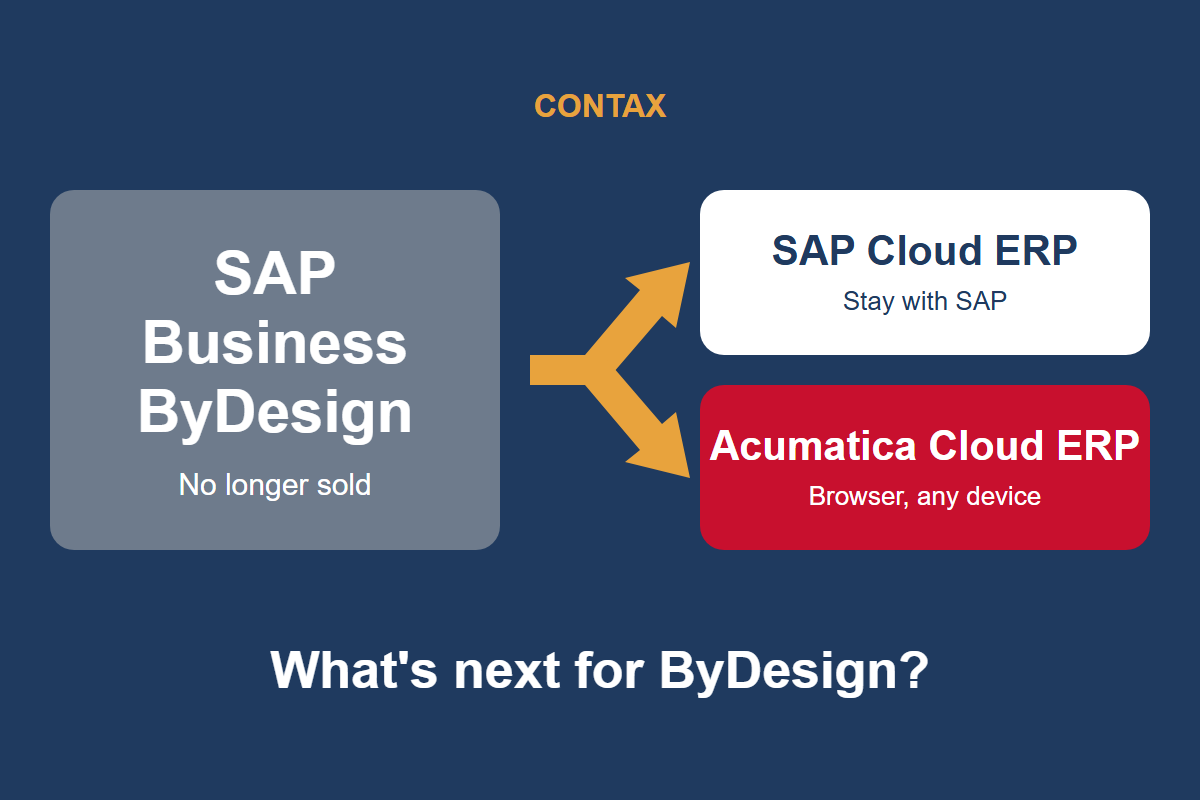
What's Next for SAP Business ByDesign Customers?
SAP has stopped selling Business ByDesign to new customers. Here's what that means if you run it today, and your options for what comes next.
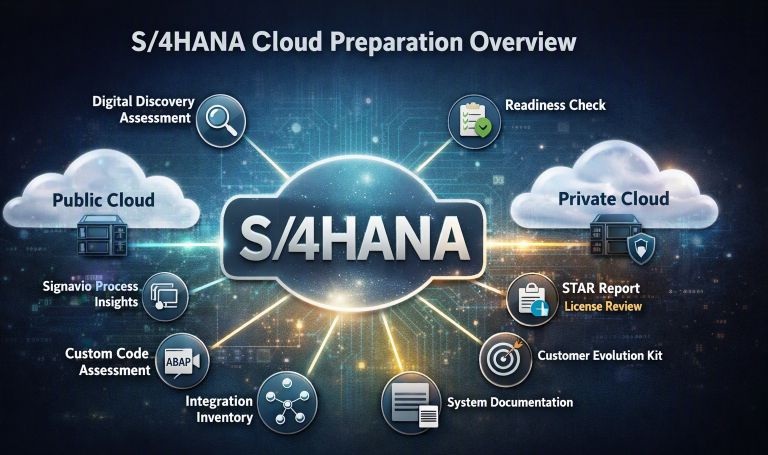
S/4HANA Public vs. Private Cloud — What ECC Customers Should Be Doing Now
A practical guide showing ECC customers the lowcost, highimpact steps they should begin now to ensure a smooth and wellprepared migration to S/4HANA Public or Private Cloud.
S/4HANA Public vs. Private Cloud — Understanding the True Cost Picture
The true cost dynamics of SAP S/4HANA Public vs. Private Cloud, and how subscription, implementation, and lifecycle factors shape longterm total cost of ownership.