
Clean Core in S/4HANA: What Actually Changes for ECC Developers
November 26, 2026 | by Rick Kromkamp
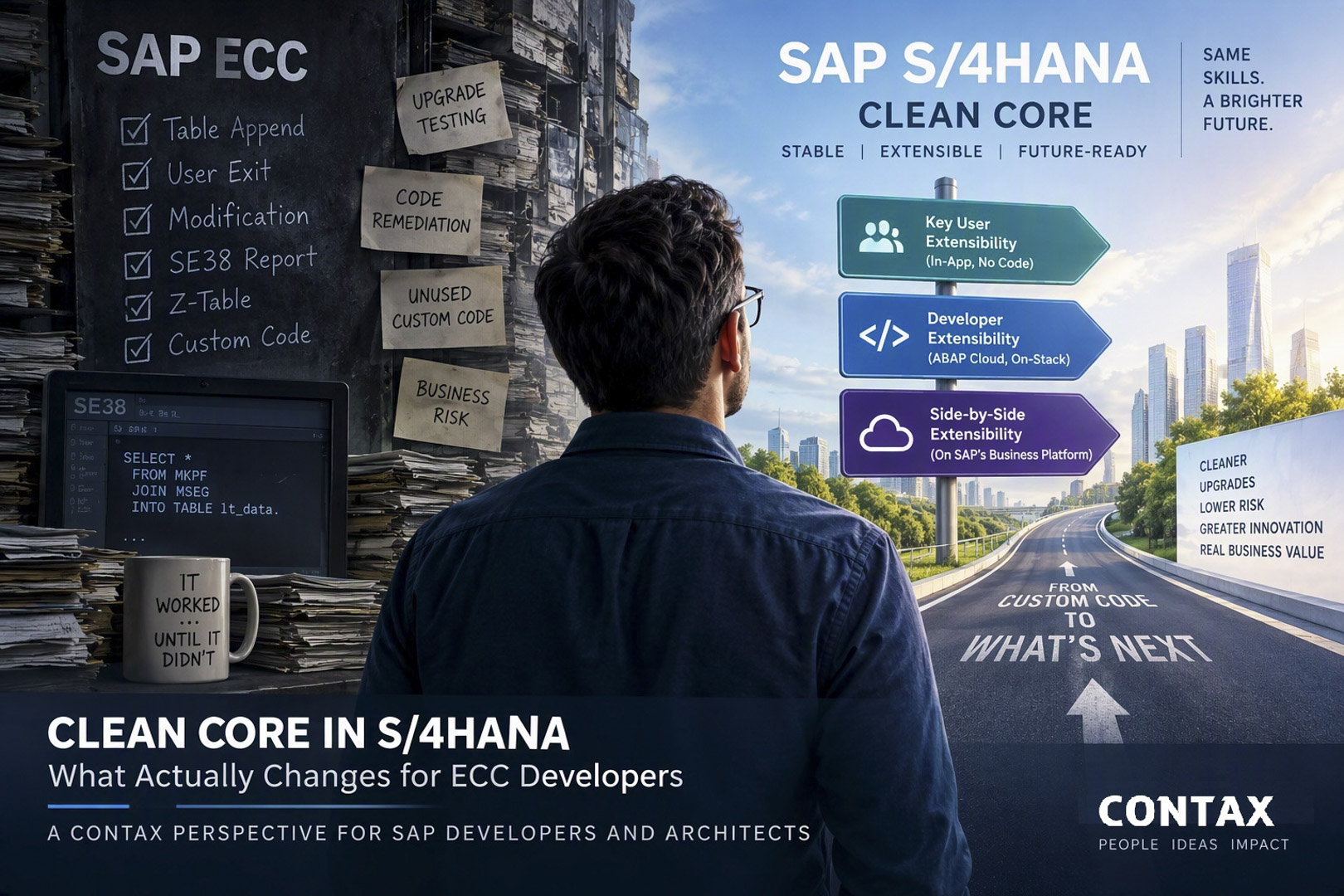
For about twenty years, SAP ECC gave developers something remarkable: freedom.
Need a new field? Append it to the table. Need different behavior? Drop in a user exit, or just modify the standard code. Need a report? Open SE38, write a SELECT against whatever tables you like, and ship it. In ECC, SAP wasn't just your ERP. It was your development environment, and a very forgiving one.
Then the bill arrived. Every upgrade turned into a regression-testing marathon. Every enhancement pack meant weeks of code remediation. Years of custom code piled up, much of it undocumented, much of it unused, and all of it sitting in the middle of the system that runs your business.
Clean core is SAP's answer to that problem, and the best way to understand it is as a contract. SAP promises that the objects it releases (APIs, CDS views, extension points) will remain stable across upgrades. You promise to build only on those released objects, and to keep modifications and unreleased dependencies out of the core. Keep your side of the deal, and upgrades stop being a project and start being routine.
That sounds simple. In practice, it changes almost everything about how a developer works. So rather than talk about clean core in the abstract, let's walk through it the way ECC developers have always thought about custom work: the classic RICEFW inventory of Reports, Interfaces, Conversions, Enhancements, Forms, and Workflows. In this next series of blogs, For each one, we'll look at how it was done before, and how it's done now.
But first, we need to talk about the biggest shift of all: how you decide where to build something in the first place.
Extensibility: Choose the Lightest Tool That Works
In ECC, developers reached for ABAP by default, because ABAP could do anything. In a clean core world, the first question is no longer "how do I code this?" It's "how little custom code do I need to meet this requirement?"
SAP's model gives you three tiers of extensibility. Think of them as a ladder. You start at the bottom and climb only when you have to.
Tier 1: Key user extensibility (in-app, no code)
This is the lightest touch, and the safest for upgrades. Key user extensibility lets business-savvy users and functional consultants extend the system from within the Fiori apps themselves, with no ABAP and no development tools. Typical examples:
• Custom fields. Add a field to a standard business object, and the system carries it through to the UI, the APIs, and the CDS views for you. In ECC, this meant an append structure, then manual changes to screens, BAPIs, and reports to get the field to show up anywhere.
• Custom logic. Write small rules at released extension points, such as validating a value or defaulting a field, in a restricted editor.
• Custom business objects. Need a simple table with a maintenance screen and an API? Instead of a Z-table plus SM30, you define the object in an app and the system generates the persistence, UI, and service for you.
• UI adaptation. Hide, move, or rename fields on standard apps, without touching the app's code.
Tier 2: Developer extensibility (ABAP Cloud, on-stack)
When you need real logic, a custom app, or a more sophisticated enhancement, you move up to developer extensibility. This is the part that surprises many ECC developers: you can still develop directly inside the S/4HANA system. You are not forced off the platform. You simply develop differently.
The rules of the road:
• ABAP Cloud. A restricted version of the ABAP language that only allows access to released APIs, released CDS views, and released classes. Classic habits like direct table reads and unreleased function modules are off the table.
• ABAP Development Tools (ADT) in Eclipse. The familiar SE80 and SE38 workbench is replaced by an Eclipse-based IDE.
• RAP, the ABAP RESTful Application Programming Model. This is the modern framework for building transactional apps and services on top of CDS views, with clear separation between data model, business logic, and service exposure.
Typical examples include implementing a released BAdI with non-trivial business logic, building a custom Fiori app on a RAP business object, or creating custom CDS views for analytics.
A note on editions. In SAP S/4HANA Cloud Public Edition, these restrictions are enforced by the platform. In private cloud and on-premise, developer extensibility is also available, but classic ABAP remains technically accessible alongside it. There, clean core is a discipline you choose to follow, typically by applying the ABAP Cloud language version to specific packages and policing the rest with ABAP Test Cockpit (ATC) checks.
Tier 3: Side-by-side extensibility (on SAP's business platform)
Some extensions don't belong inside the ERP at all. Side-by-side extensions run on SAP's platform layer (the technology you may know as SAP BTP, now positioned under the SAP Business AI Platform umbrella) and talk to S/4HANA through released APIs and events. Typical reasons to go this way:
• The extension is loosely coupled, for example a supplier portal or a mobile app.
• It is external-facing, so you don't want outside users anywhere near your ERP.
• It needs its own lifecycle, so it can change faster than your ERP release cycle.
• It needs different technology, such as AI services, or a different development stack like CAP or Node.js.
You can even use ABAP here, through the ABAP environment on the platform. It uses the same ABAP Cloud language and RAP framework as on-stack development, so your skills transfer.
The rule of thumb

Choose the lightest tool that works. Every step up the ladder buys you power, and costs you a little more governance and upgrade risk.
For ECC developers, this can feel restrictive at first. The tools you relied on for years are still there in many S/4HANA private cloud and on-premise systems, but clean core asks a different question: not "Can I do this?" but "Should I do it this way?" Success is no longer measured by how deeply you can reach into SAP's internals. It's measured by how much business value you can deliver while staying on the upgrade path. The developers who thrive in S/4HANA won't be the ones who know the most tables, exits, or function modules. They'll be the ones who know how to choose the right extension model, build on released APIs, and keep customizations where they belong. That shift, more than any new framework or tool, is what clean core is really about. In the next article, we'll start with the first item in the RICEFW inventory: reports, and why the days of writing a quick SE38 report against MKPF and MSEG are coming to an end.
Final Thoughts
If your organization is evaluating its S/4HANA strategy and wants expert guidance, CONTAX is here to help. Visit www.contax.com or contact info@contax.com to start the conversation.
About the Author

Rick Kromkamp
Related Articles

SAP Extended ECC to 2035? Read the Fine Print
SAP now lets some ECC customers stay on ECC until 2035, but only in its private cloud, on HANA, under conditions most mid-sized companies won't meet. Here's what changed and what it means for you.
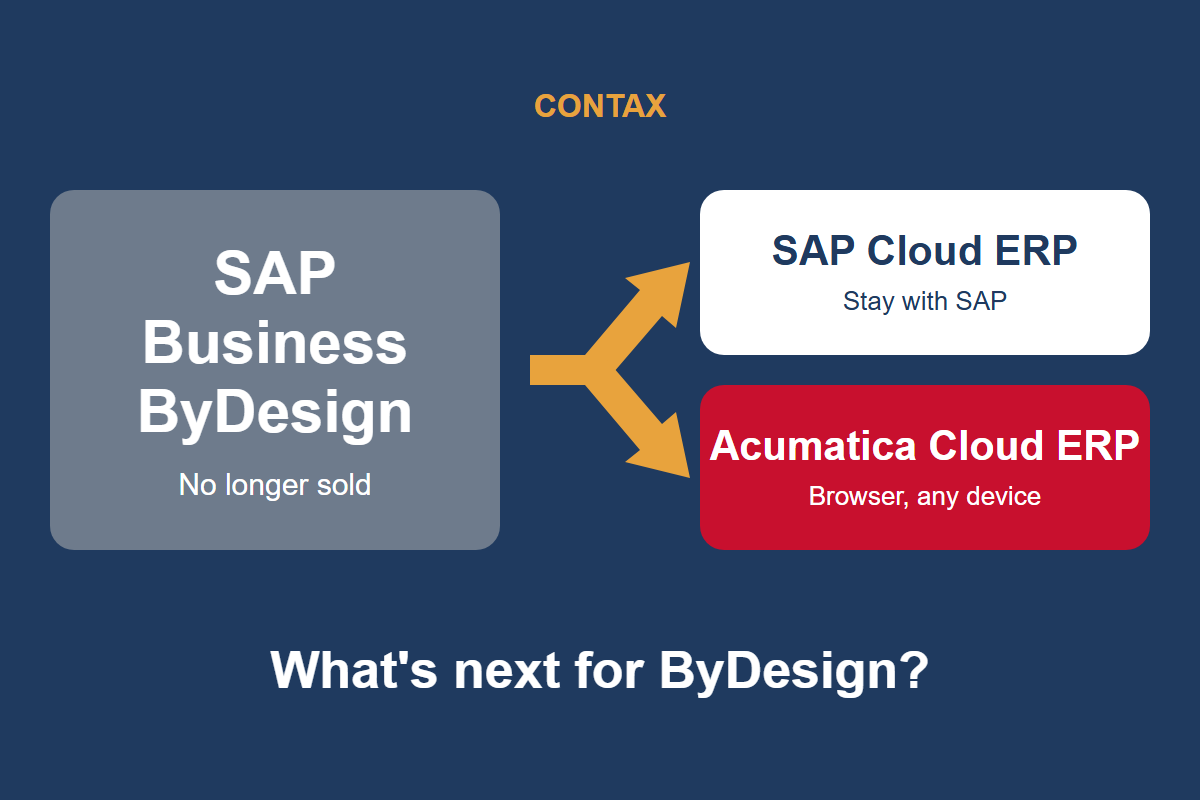
What's Next for SAP Business ByDesign Customers?
SAP has stopped selling Business ByDesign to new customers. Here's what that means if you run it today, and your options for what comes next.
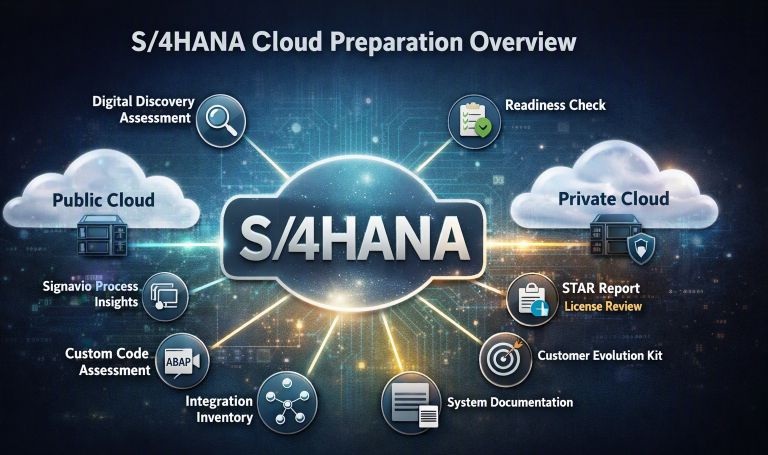
S/4HANA Public vs. Private Cloud — What ECC Customers Should Be Doing Now
A practical guide showing ECC customers the lowcost, highimpact steps they should begin now to ensure a smooth and wellprepared migration to S/4HANA Public or Private Cloud.